On conflict and eldering
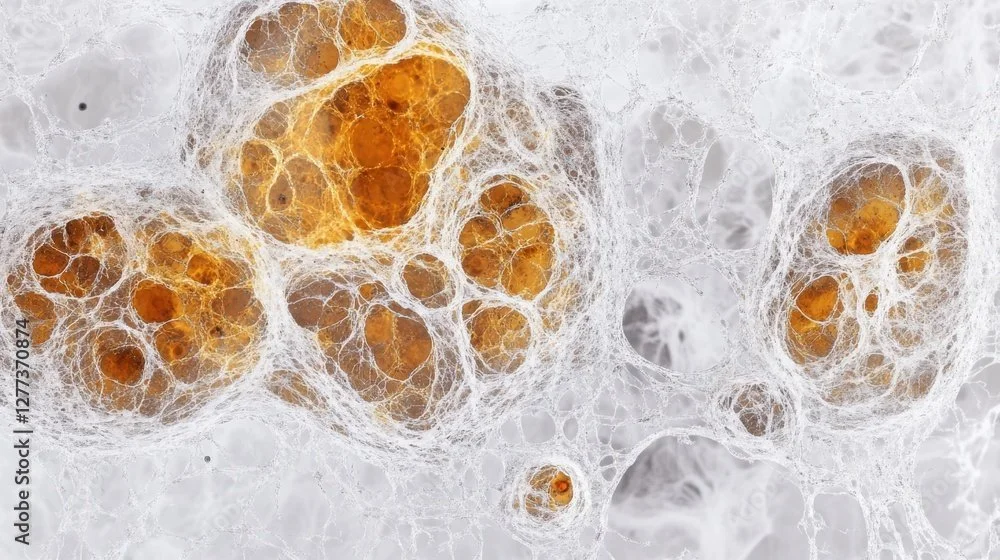
Aging cells
This is part of a series on conflict I am going to be writing over the summer. This piece is part of building a case about the relationship between eldering and conflict work. I’ll carry it forward with another piece.
A few things to start with. First, when I use the word “elder,” I am talking about people over the age of 60. A bit further down, I am going to complicate this even more but this is a good starting place. I am also talking about a life stage, a developmental stage, that like every other developmental stage is impacted by oppression, abuse and poverty. Woven through everything I am going to write here is a reflection on who gets to live to the age of 60, let alone past it. Your life expectancy, my life expectancy, is the result of hundreds of variables, In March 2026, life expectancies published by the Kellogg Foundation state (I am using the government’s way of categorizing race): American Indian/Alaskan Native people have a life expectancy of 70.1 years, Black people have a life expectancy of 74 years, white people 78.4 years, 81.3 for Hispanic folks and Asian folks at 85.2 years. Before I move on, take a moment to breathe and notice this. Don’t let it just be information that your brain logs. Let it have meaning; physical and emotional and spiritual meaning.
These broad racial categorizations are not fully useful. Within each category, there are multiple differences. Hmong communities tend to have higher percentages of poverty than multigenerational Chinese-American communities, Southern folks live in greater poverty with lower life expectancy than northern folks, and there is great variance in multigenerational middle class Chicano and/or middle/upper class Cuban-American and/or wealthy white Latinx folks and/or land grant families in comparison with undocumented beloveds, indigenous and Black Latinx folks and those who are current refugees. Up until this generation you had a higher life expectancy if you lived rurally but now it is the opposite and people in urban areas tend to live longer than those in the countryside. This is as much about the destruction of rural healthcare networks as it is about the impact of generations of pesticide and fertilizer use. And beloved trans kin, the impact of transphobia combined with the other oppressions you experience means that your life expectancy is significantly lower than my cisgender one. When talking about who gets to be older, there is a significant difference among us. This is not just information. This is personal. This is about who has access to stories and memories and relational lines that continue across their life and who loses more of this. I think about all of this almost every single day as I move through my community, looking left and right at my beloveds and thinking: this is about us. We are all getting older, my friends who I used to dance at Club Metro with, perform at Vulva Riot alongside, and create marches and art forms and writing groups and direct action strategies and frameworks and love triangles. This is not about impersonal statistics. Every single aspect of the systems we are trying to change impacts who you have access to and for how long. If this writing and the pieces that will eventually follow does anything at all, may it be one small part of creating the conditions that enable more of us to have more old ones.
And while this is about things like life expectancy and oppression, it is also about how much we remember the ones who are still living. It’s about how we understand and are in relationship to what aging brings. In movement spaces, the generational gap between folks in their 20s and folks in their 70s is dramatic. Someone I met from Syria recently said this to me: what is it about how the United States treats old people? Don’t you realize that an old person is the sum total of a culture? If you look to understand who you are as a community, look to your old people. They have been absorbing the cultural teachings and practices of your culture for more years than you have. Look past the generational differences of word choice and other shallow things. Deep change doesn’t happen that quickly, these differences are mostly cosmetic and are often as much about marketing combined with differences in developmental stages as they are about real generational differences. Look to your old people to understand the culture that is shaping you and your children. They are the product of everything that makes you who you are, the outcome of what is currently wiring your nervous system. If you dismiss or discard or ignore your old people, that says everything about what you think of yourself. It says everything about what you believe is possible for your children.
What the hell is aging?
There is something physical that happens as you get older. I am using the word “physical” because it feels as essential as breathing, as the fact that you have skin. And by physical, I don’t just mean wrinkles and decreased muscle tone.
Think about yourself before puberty. Can you remember, clearly remember, what it was like to be 5 or 6 or 8? Can you remember how different the before and the after were for you? It’s somewhat vague for me. The only concrete thing I remember happened in the summer before ninth or maybe it was tenth grade. I had joined the marching band and practice started a month before school began. It was one of the first days of practice and I was walking up towards the school to go into the band room. As I drew closer to the building, I saw my reflection in the glass door and stopped, feeling confused and disoriented and even shocked. My legs, which had previously been stick straight, now had curves. I was wearing shorts and all I could see was this strange thickness towards the top of my thighs, this rounding out and then back in. I remember thinking, what happened? This is NOT my body. I was also disgusted, the internalized fatphobia that I hadn’t even realized was there rearing up and yelling at me, interpreting these new rounded parts of me as dangerous and ugly. I did not expect them. In the 1970s, there were no selfies and not nearly as many full length mirrors. You just didn’t see your reflection very often, at least not in my family. I had to stand on my tiptoes in the bathroom to try to see my legs and I could never get a complete top to toe view, except in moments like this, when walking past a glass door and the reflection is just right. I can still feel the shock of this new body, the cold sweat and tightness that rushed through me as I saw something strange. Alien. This carried over to the first weeks of school as my classmates, all boys, stopped me in the hallway, eyes scanning my chest, smirking, and then whispering in my ear: well I know what YOU were doing over the summer.
Adolescence and puberty is intense. It doesn’t happen in the same way for each of us and it doesn’t hit each of us at the same age, but if you could describe one of the outcomes of this period, it is visibility. Feeling and sometimes being overly visible. Exposed. Puberty gave me a body with boobs, curvy hips and a butt and so puberty meant I went from being just a body in the pack to getting way too much attention. Not everyone experiences this in the same way and for some of you, puberty meant that you became even more aware that you weren’t getting the same attention as others were. Or the attention was more in the line of bullying, or a different kind of bullying than the sexual harassment I was supposed to think of as normal.
Puberty is about moving into the field of visibility, one way or another. We have novels about this, textbooks and classes in school. When I was 10, 11 and 12, our sex classes were separated by gender (only male and female in the 70s) and after we went through “our” material, we switched and saw what the other class saw. We were supposed to talk about it but it was embarrassing and mostly I remember learning again and again about how menstruation happens and that my body was going to change and that I couldn’t stop giggling when I saw the graphic that showed how a penis gets longer. My friends and I called it a slinky.
The other side of our lifespan carries the exact same intensity of change but there are very few novels, textbooks and classes where someone will say to you: “here is how you are going to feel. It is different. You will be different. Here is what is likely to happen to your body, your emotional and mental health, your sense of yourself in relation to others”. The classes I took in the 1970s were not inclusive and they taught a kind of one size fits all approach, but at least there was an acknowledgment of change. At this post-60 age, there is nothing. I am watching a slow increase in material about menopause and perimenopause but I am talking about something different, or related but not the same thing. The energy of this moment, this post-60 age, moves in the opposite direction from puberty. Whereas puberty was about visibility in all of its complexity, this stage is the opposite. It is about invisibility. In the cultures that shaped me, the fact that we age is largely disappeared. When there is a conversation about aging it is discussed as a problem to be fixed. Here is how you can keep your body flexible, your sugar levels low, your cognition quick. Here is how you can make the most out of your old age. My favorite articles are the ones that tell us how we can find or keep meaning in our lives, as though meaning is disappearing along with our skin elasticity. Most of what is out there is about what we lose, there is very little about what we gain. This is about ableism, all about the idea that what is preferable is a young and able body that looks and moves in a specific way.
There’s a new theory out there called gerotranscendence. Gratitude to Meg Riley who is ten years older than me and who told me about it. When I first heard the term, I rolled my eyes. Sometimes I get tired of how my people seem to have a framework for everything, this sense that if we can describe it - aka control it - then everything is ok. But then I got over myself and read it and something inside me settled. This. Just this, I thought. With this framework, I heard a reflection on the benefits of aging, not as a kind of consolation prize, but as a real and important part of how our collective body of kin makes sense of life. Something that exists for a reason, and not just to prepare to die.
The theory is simple and Lars Tornstam, the Swedish sociologist who is writing about it, spent twenty years listening to and observing the aliveness of adults over the age of 60. Here is what his theory asserts: there are natural positive mental and emotional changes that happen as we age. These changes are opportunities available to us as we get older and Tornstam believes that, right now, only about 20% of older people move through them. This is part of the point of his research. He asks the question, how do we shift the context around aging so that we have access to more people who have moved through what he describes as gerotranscendence? So that we collectively have more of the benefits that come with time? Before I go on, every one of you who was raised in a cultural community that honors elders in ways that hold shared meaning for their specific importance already knows what I am about to say. You all already know this because I experience it when I am invited into your space.
During the developmental process of aging, Tornstam reflects that the life goals and perspectives of individuals begin to shift. What this looks like is deeply and directly impacted by a person’s culture, race, ethnicity, region, religion, gender, socioeconomic status, values, work, relationships, etc. This is not a one-size-fits-all kind of thing, but it is, he asserts, a thing that happens. And Tornstam talks about this “thing” that happens by breaking it down into three categories: cosmic, self and social/personal relationships.
The cosmic dimension of change refers to change in how a person reflects on the meaning of being human. As we age, our sense of time begins to shift and the distance between the past and present seems to disappear. Humbly, I am only at the beginning of this. I notice that as I move through Minneapolis, a city I have lived in for almost 40 years, the past has moved from nostalgia or memory to something that feels physical. I can feel my 32 year old self biking down 31st avenue in the middle of a storm and my 39 year old pregnant self waddling down 14th avenue and my almost 63 year old self all at the same time. This is different from how I used to feel it, where memories would flit through my brain, engaging me or not, and they would feel like the past. Now, they don’t feel like the past, but another kind of present. In this stage, past events from childhood move through the body demanding attention and integration, but not the way they did before. These memories don’t rise as trauma bubbles that overwhelm me into healing. Instead, they rise as something else, something that wants to keep moving through. I have laughingly said to friends as I have noticed these changes, maybe I never needed all those years of therapy. Maybe I just needed to wait until I got older because some things that felt hard to access or hold are much easier now. At this age, ancestor work doesn’t feel like work. The ancestors are just so much closer than they were before and it is hard to explain the nuance except that I have been attending to my and our ancestors for more than 25 years and something has shifted. Maybe it’s just that the space between us is shorter. You can transpose the word “cosmic” with the word “spiritual.” The places of unknowing, where death and spirit and ancestors and more-than-we-can-understand live, feels more familiar.
The next part of this change Tornstam calls “self. ” My sense is that this is why Tornstam asserts that only 20% of the people he was studying move through gerotranscendence. Here’s what I mean. In this stage, self-confrontation or the capacity to look honestly at yourself, to confront your own demons and tell the hard truths, rises. The fact that it rises doesn’t mean that you meet it, and many older beloveds don’t, but if you turn towards your shit, it is easier than it was before. Tornstam’s theory cites a decrease in self-centeredness and ego-protection, a decrease in obsession over how you look and, in particular, the body that your spirit rests in, and a sense of being in service to others, particularly younger people, that is different from how it was in the past. There’s a lot I could say here but I will just share this: it’s not unusual for me to spend time with people younger than me and at one point someone will express gratitude and ask what they can give to me in exchange for my attention and care. I always laugh and say, you don’t understand. I increasingly need these conversations as much as I need to breathe. I keep using the same word over and over again - it’s PHYSICAL. When I say that, I mean that it isn’t really about choice. Not at its root. It is a need, a real need to show up and care for and tend and be in good connection with folks who are going to be around longer than I will. And from what I hear from those older than me, I expect that this is only going to get stronger. And here is why I feel like Tornstam’s reflection that only 20% of a population - and I think he means of a western modernist population - emerges into gerotranscendence. Sadly, most of our visible older leaders, often although not only white men, who are over the age of 60 are deeply invested in their self-centeredness and ego. Because the United States is a country that centers hyper individualism, this part of aging is distorted by a cultural assertion that survival is based on being ego-strong and in control. And so folks with social and structural power often end up hoarding that power as they age, building and creating more rules and regulations that protect and expand their power rather than handing it off in a good way to those who come next. It’s part of what has given rise to Ok Boomer and the concept of the Karen and this sense that old people are happily spending their pensions and retirement funds, clueless about how much younger people need to struggle to make ends meet. And yes, everything about this is racialized and about class and gender and more, just like all things.
The third set of factors, what Torvam calls the social and personal relationships dimension, are about how we relate differently to others as we age. In particular, he reflects that it is likely that we want to be in fewer relationships and to go deeper with the ones that we have. And that we have a different hunger or need for time in solitude which feels true for this extroverted Leo and it is one of the things that has surprised me. Some of the relational game playing or role playing that is part of a collective cultural context starts to shift. A sense of being outside of roles or not needing them anymore or not feeling hurt or left out when the games or stories don’t include you is part of this, too - IF you have done that work around ego release. There is a decrease in internalized social pressure to say or do the “right” thing and a greater likelihood for speaking outside of social conventions or rules. I see this a lot in the movements I am part of. Our movements have a lot of rules and protocols for how we are together. These come out of wisdom and a desire to express our commitment to justice in every aspect of our lives but they don’t always take into account the complexity and nuance of a person’s experience and thinking. Here is where tension between people in their 20s and 30s and people in their 60s and 70s and 80s can be quite high. Younger people are often creating or asserting social rules that support the management of complex communities like what one does and does not say, new ways of naming and understanding ways of being alive, and new or recreated frameworks and moralities for how we live together. Older people are often more likely to speak what is true within them even if they contradict those social rules, to not learn these new ways and to feel like the rules are too simplistic. Or simplistic in a way that misses the complexity of nuance. And between these two parts of a binary, tension rises.
Other things that are part of this category: a decrease in materialism, a decrease in an interest in telling people what to do with more focus on supporting people to find their own answers, and an increase in humility and tolerance. Again, this is one of those places where the wound of aging and disappearance can be louder than what aging can bring. I know and witness a lot of older people desperately trying to tell younger people how to be. I use the word “desperate” on purpose because I am not talking about leaders, I am talking about people who are aging and feeling their relationships with younger people slipping away. And so they reach out in the only way they know how, through stories and past experiences because, and I have heard older people say this, it feels like if I could just share the mistakes that I made over and over again then the person I love or care about won’t make the same ones that I did. This is about control rather than care, about trying to direct someone else’s life. And in terms of materialism, the US cultural mainstream says our identities are only as real as the stuff we buy to support them which means that there is a whole market for people who are in their 60s and 70s, with less targeting of folks in their 80s and 90s. Ironically, when I looked up and read marketing guides on reaching “seniors,” they were another way of naming elements of what Tornstam asserts with his theory of gerotranscendence, and how to overcome them to get us to buy things. Really, the guides were so infantilizing that I wanted to scream.
Tornstam coined this theory because he wanted to offer a reflection on the benefits of getting older. He wanted to show that this is a part of our life that we can look forward to. He also wanted to show that our communities would benefit from supporting more of our older folks to go through this process of gerotranscendence because it is good for all of us. Again, thank you for not rolling your eyes, beloveds who come from communities who never forgot what my community has left behind. Every conversation I have had with someone raised with clear cultural traditions, like folks indigenous to Turtle Island and others raised in Ethiopia, Somalia, Southern Black folks, Hmong, Vietnamese, Chicano/a and other communities, talks about eldering or the relationships with people who are older differently. I hear them talk about older people as storytellers, memory keepers, teachers of children and also spiritual leaders and conflict tenders. And it’s that last piece that this next section is going to try to unpack.
On aging and conflict
Recently I was in a conflict conversation with a small group of people I respect and care about. Our age variance was between someone in their late 30s with me in my early 60s. I think that the next oldest person to me was around 50. The conflict was important, following a project that we were all part of. As we were talking about our experience of what had happened, I noticed that I was experiencing our conversation differently. There was a part of my brain that recognized the pattern of conversation, a mix of misunderstandings and poor choices and a lack of clarity and communication that left some of us feeling invisible or diminished or overlooked. But while I recognized the pattern, I felt somehow separate. Not in relation to my own shit or trauma that led to dissociation or disconnection. No, this was a new feeling. It’s like I was sitting on a rock at the side of a pond and I was watching everyone in the pond swimming around, engaged with each other in the water, and I was just someplace different. Before I could see this difference, I spoke from this place in a way that was hurtful. My words felt - and were - dismissive to the others in the conversation. I didn’t mean to be dismissive because that is not what I was feeling, not even a little bit, but I also didn’t feel the strong feelings that the others were feeling. This is a change. A significant change. Usually my body mirrors what is happening in the room or with the other people around me. I have depended on it, using it to sense where there is harm and where I have caused pain. But this feeling of being in the emotional mix has begun to shift. As I began to notice this - and also to hear how my words were being experienced by the people I cared about - I was horrified. Reels of past conversations that I have witnessed raced through my mind, different situations where one or two people who were not experiencing the same thing the others were experiencing ended up minimizing it because they couldn’t feel or understand what was happening. In the past, I’ve mostly seen this happen across race and gender and ability and so on. But this time, as I sat there, I realized that, for me, this was about something else. That this was not about an ignorance of what was being named or a dismissal based on some other theory about who people are in the room, but something else that had shifted.
Because at that moment it was more important that I do repairs, I didn’t take a bunch of time explaining this during our process. And, no matter what, my impact was real and I am accountable to that. Always. But there is something important here because it is about a difference that I think we still don’t have language for. And I think not having language or understanding or placing for this difference can actually lead to painful and irresolvable conflict, or it can be part of helping us hold conflict when it rises. At that moment, as I realized what was happening, I understood yet another reason why you don’t find people who are older in movement spaces where the majority of people are younger. Because when I said “this all feels easy to me, like it’s not that important,” I wasn’t intending to minimize anything but instead, trying to describe something that feels, well, different inside. It’s what Torvam is talking about when he reflects that your relationship to social roles and rules and the behavior associated with it begins to change. I was trying to convey that I am not in the same place, that things look different from where I am, but I did it awkwardly and without respect for the very real feelings that were in the room around me. It matters deeply to me that I stay in these younger spaces, for all kinds of reasons including that I want to break the pattern that means we stop learning together once some of us get older. And so I have to understand what is happening or I could be another gray-haired person unintentionally causing pain and then leaving because it’s just all so confusing.
When I left that conversation, I started thinking about Torvam’s theory and about what I have learned from beloveds who were raised in and live within communities who have not snipped off their people who are older. And I thought, rather than trying to adapt only to the world that I am aging out of, what is the benefit of this developmental stage? Do I just have to keep figuring out ways to orient to something that is no longer how my brain works or is there something else happening? What were our ancestors thinking when they evolved this shift, when it would have been just as easy for us to stay in our post-puberty selves until the point of death? If we were to say that the first stage of life is pre-puberty and then the second stage is adult life, then why do we have a third stage where we live for longer than our reproductive years and when we go through a whole other developmental intensity, one that happens differently for all of us but in general, still seems to happen?
I have reflected in other places on the storytelling part of this change, that physical urge to share memories and pour energy into those who are younger than I am. I wrote about this a little bit at the start of Liberated to the Bone when I reflected on something a friend of mine shared, that as you age, you gather experiences like stones that you put into your pockets. At one point you begin to shift from gathering stones to handing your stones out to others. If you are lucky enough to live a full life span, then when you cross over, your pockets will be empty. But Torvam’s theory and the words of still-connected kin remind me that as we age, we are more than storytellers. There are other things that this stage can support. I imagine that I am going to continue to learn what I mean by these words with each additional year that I live. I am still very young-old. I want to focus on the thing that I am only just beginning to understand and that rose after I experienced the conflict described above.
I explained this to my daughter recently. I said, since puberty I feel like I have been swimming in this swimming pool of hormones and expectations and emotions and entanglement and consequences and colliding meanings. And now, for the past 10 or 15 years, I’ve been slowly stepping out of that swimming pool and moving to the edge. At this point, I am just recently up fully on the sides, looking out at the pool but not in it anymore. I imagine that with every passing year, I’ll notice a greater distance. It’s a strange but not uncomfortable feeling and I think it is why multiple research studies cite that the period that rates the highest in life satisfaction falls in your 60s and 70s with the age of 70 named as the peak. Things that used to bother me or hook me just don’t. And all of what Tovram wrote feels true and grounding and settling and so so good. How I feel about what is happening for people swimming around in the pool feels different from how it used to. And then, I told my daughter, I realized that maybe this distance could be a useful thing. Because distance does not have to mean separate. It could just mean a different form of connection.
As I have gotten older, I have had more and more people reach out and ask me to hold or support conflict. I know that some of what leads to this is about years of being a bodyworker and learning how to listen to people and see the various lines of relationship that sometimes tangle. But in more recent years, it has been more than that. Or, I should say, holding conflict has gotten easier. Not being in the middle of it, of course. Conflict is just plain hard, no matter how many skills you have. But when it is not about my family, really the primary place where my emotions still get tangled, then it just seems easier.
If you weave together the parts of Tornstam’s theory - feeling more connected to the cosmic/spiritual part of life, feeling less protective of your ego/self and more interested in showing up with care and service for others, and feeling less tangled with the social rules and norms - then think about how this kind of personality shift might impact community’s hardest moments. Think about how those hardest moments might be supported by a person or people who are trusted and who have moved into gerotranscendence. If the theory holds true - and the evidence of multiple communities who have not forgotten how to live in relationship to old people would say it is - then it seems like people in this stage would help us to feel connected to something bigger than ourselves and bigger than the pain and awkwardness of the present moment. They would be able to focus more on what is happening for the person who is speaking and would be able to see, ideally, that person outside of the social rules and norms that sometimes trip up our creativity and possibility. They would be experiencing a kind of distance that is, at the same time, connected. This is a specific positionality that emerges in many different ways, being both a part of something and also being somewhat distant, but what if our ancestor’s intention with evolving us to have this whole other stage of life was to create the conditions for this to be one possible thing that happens as we get older?
And again, it isn’t just older people who can do these things. I was recently talking to two people I support who are in their 40s and are facilitating a very difficult process. At one point, they reflected on how the folks they are facilitating, most of whom are younger than they are, see them as elders. When I heard them, I thought yes, here is where we are confused. Because we exchange the words teachers and mentors and leaders and elders as though they are versions of the same thing. I said to them: when I say that this part of aging, this thing we call eldering is physical, I mean that it is different from what you experience when you are called on to play the same role at a younger age. There is something that is much easier about showing up for the hard moments, about watching as the tangles of ego and defensiveness and longing and hunger all get tangled together and everyone is holding on to their end of the string with all of their strength. I said, I think our ancestors set us up so that in this final stage of life, those who have lived in a culture for their whole lives and who know a lot of its nooks and crannies, who are like the woman who helped us with a thorny immigration issue, might well be able to see things that help us untangle that it is harder to say when you are still in the middle of it.
One of the things I love about being in Native spaces is that there are various kinds of respect for people who are old: a general respect for all old people which means when I am in Native spaces, young people always serve me food now. But this respect doesn’t assume that I have anything to teach or share because all of that only happens within the context of relationship and choice. And relationship is always about all of the people in that relationship. And about the choices that each makes. Not all old people have learned the same things and are old in the same way. Just the fact of being old doesn’t mean that folks want your stories or that your stories are relevant to them. Especially if you are not a part of their communities, if you have not experienced similar things that would mean you have learned from what they are experiencing right now. There is so much bitterness among older folks, for reasons that are understandable and for reasons that are about drinking the kool-aid of US exceptionalism. Assuming that the fact that you have lived for a long time means that your experiences are important in general. They aren’t. They are important specifically.
Because this is all confusing and twisted and tangled and older people are easily dismissed from younger spaces and we don’t know how to do this, a lot of us leave. We leave movements, community, and spaces where it is younger people who are determining the pace of things. I say this often, with each decade that has passed, when l look left and right, there are fewer people my age who are in the rooms I am in. When it is assumed that we are all still in the same swimming pool, older folks can come across as awkward. Not getting it. Missing the cues. And older folks, my god we repeat the same cliches that we heard from older folks when we were younger. “Young people these days, they don’t know what it is to work” or “they all want it so easy,” or “they don’t understand what we’ve been through” and more and more and more. I wonder how much of this is just what happens as we age and how much of it is a wound that keeps repeating itself. I think that often these cliches rise out of frustration at no longer belonging, at not being recognized for the work done to support the present moment to occur, the things that are easier than they were a generation or two before, and then there is being perceived to be slow or stupid or ugly or no longer sexual or any of the other age-phobic things that are repeated unintentionally by younger folks and older folks as well.
I don’t want to leave movements. I would miss you, people who are younger than I am. I would miss you a lot. I am so grateful that in my life I have growing friendships with people in their 20s and 30s. That I have people in my life who are in the before-puberty stage, who are swimming in the hormonal pool, and who are older than me in this third stage. I don’t want to leave because leaving feels like a wound, a disruption that exists in the exact same way that not having children in our spaces can sometimes feel like violence.
I imagine I am going to keep writing about this over the coming years, looking for ways to practice and to learn from others older than me and from communities who have not forgotten that there is a benefit to the changes of aging. And in order to make this more concrete, I am going to awkwardly name a few pieces of what might be some kind of protocol. Awkwardly because honestly, kin, fuck if I know the answer to any of this but I know that things need to be different:
First, notice that if you don’t have some kind of protocol, some agreement on how to do this work together across generation, you are not going to see older people - let alone children - in the spaces you create. Intention and political frameworks don’t matter if there are no clear concrete agreements. These include recognizing the assumption of the speed of your work, conversation and relationship building. There is nothing new here. This is about ableism, of course, and it is about the fact that every generation has a culture - and not just a single culture within each generation and still, there is a generational culture that is about what has shaped you and is shaping you and is about your developmental stage and more.
If you are older, spend time noticing what wiser communities than us - and gerotranscendence as a theory - names about the benefits of aging. Take a solid inventory and notice how much you do - or don’t - live in relationship to the possibilities outlined here. Do you want to spend time with people who are younger than you? I keep thinking of folks who have created those 55 and older only communities, something I see as being about a reactivity to how culture changes and a building of walls so that the people inside don’t have to change. Do your work and practice the humility named again and again. Notice your entitlements and resentments and expectations and grief. There are many people I love in their 70s, 80s and 90s who have so many stories to share but they have also not done this work. They don’t notice and have not spent time building their ability to repair and be aware of their impact on others. The fact that they have not done this gets only more obvious as their social engagement system begins to change - meaning their NEED for other people in a kind of ego-affirming way begins to change - and so they care less about that impact, building justifications for it in their mind. Younger people are so sensitive is one of the things I hear. Or I worked hard back then and now I just want to rest, to leave it to the younger folks. It doesn’t matter what age we are, every one of us has the capacity to build a story in our mind so that we can act in ways that contradict our values and still feel like we are a good person.
If you are younger, notice the expectations and attitudes you have about your own aging. When you imagine wrinkles and gray hair and all of the things we are supposed to protect against, do they feel like the dangers you want to avoid for as long as you can? Notice your own internalized ageism and witness it. Be tender about it. Imagine something different. And notice, do you REALLY want to be in a relationship with people who are older than you? An increasing number of younger folks talk about wanting elders, but wanting elders close to you isn’t just about having some wise person with stories that you can plug in when you need them. These are relationships across differences that need to be tended just as much as any other. I know of two different situations that have happened in the last few months where a younger person has sought out someone they name as “elder” and then been frustrated with what they were told or who the real person was versus their story about them so they just turned away, rejecting them completely. Notice where you romanticize the idea of a “wise elder”. Notice what grief you might have about the caring and attuned adults you didn’t have when you were younger and notice if some of your desire for an elder is a desire to fill in that chasm in your heart.
Look around you. Who is in your life right now who is at a different developmental stage than you are? For a lot of us, it is difficult to start this with family. For others, it is easier. There can be other layers of family dynamics that can tangle and trip other possibilities or this can be the place where we feel safest to be awkward. Notice who is in your life who feels easiest to reach out to, less layered. And then reach out to have a direct conversation about generational differences. Be curious about each other and if you are the older one, don’t assume that you know what the younger one’s experience is just because you had your own version of it. I am grateful to know people here in the Twin Cities, specifically in queer spaces, who are building things like this. Thank you, Katie Spencer. And thank you National Council of Eldering for the work you are doing and how you are doing it.
And then just imagine…. If what is written here is true, the role that elders can serve, how might that support the work you are building: politically, culturally, emotionally? What would be different if you could call someone to help untangle something that feels overwhelming? And older folks, imagine what it would be like to truly support someone who is younger than you are, not to be or do things the way that you did but to be exactly who they are with the things your experience can support them with. Recently, my family was in an immigration fiasco - something at the level of a head cold as compared to the intensity of what immigration bullshit can be, and still, it was stressful and difficult. We kept encountering younger folks at the help desks who kept giving us wrong or incomplete or dismissive information. We finally got to someone, an immigrant herself, who had been in this work for decades and she cut through the bullshit in minutes. I didn’t blame the younger people, although we were all frustrated by them, because they can’t know what they don’t know. We spent some time talking after this situation rolled out about how grateful we were to encounter someone who had clearly had years of experience, years to make a shit ton of mistakes and work through them and come up with work arounds and more. I kept thinking, this is what an elder is supposed to do; share these concrete workarounds and reflections and understandings not to get their own way but to support someone younger, not only for that younger person, but for the one who comes next and the one who comes after them.
And in terms of untangling the many shapes of intensity that we call conflict, what if part of gerotranscendence is that, when this is what happens, we have built in folks who can show up and help us manage the things that are still sticky for those in the swimming pool and that have more spaces and less intensity for those standing on the edge. Like the woman who helped us with the immigration problem, maybe this is something our ancestors intended, a built-in way to learn the twists and turns of our cultures so that, eventually, we are not overwhelmed by them?
I can’t help but wonder if one of the reasons why there is so much conflict in our movement spaces and in our communities - and in our families - is, in large part, because of not having access to this third developmental stage in our collective connected relationships? This is all about oppression and histories and the way that families are targeted or regimented rather than supported to be who they are - for the long term. The more I understand what our ancestors intended as the benefit of getting older, the more I think about how much this impacts so much, including our capacity to maneuver the conflict that is an essential and regular part of life. After all, evolution and change depend on conflict as one part of the web of connection. Conflict is an essential part of life. Surely our ancestors over millions of years would have evolved ways for us to attend the tension in relationships when it feels intolerable. I am not a conspiracy theorist which is why I wrote the last piece on conflict and immunity because, as a species, we have the capacity to survive even if we disconnect from the web of life that sustains us. The fact that there are parts of our species, certainly my people, who have created the normal that being old is just a problem to be solved until you are dead, and that getting older is about having more time to accumulate what you want for yourself and your direct descendants rather than what we need, only helps the controlling nature of any authoritarian force.
We need each other. We always need each other. But we don’t need each other randomly. We need each other specifically. We need more old people to go through what Tonstam describes and we need those old people to be in relationship to younger people, each supporting the other to care for the ones who come next. To give support when conflict is tight or when the way feels overwhelming or when someone feels like figuring out how to get to the next step sits squarely on their shoulders. It’s that last one that I notice comes up the most often when I am talking with people younger than I am: take a deep breath. Forgive yourself for what you don’t know. Remember that nothing is about you alone, the changes you seek take generations. Remember you hold a small part and notice that urgency is not about these last five minutes or weeks or years but about a lineage of pain that demands our attention. Notice it, breathe with it, take it seriously, and then expand. Extend. And notice what the next step is that feels clear and grounded and not an overreach that is trying desperately to feel better. And along the way, keep being aware that you are alive, that what you are feeling is life breathing you, as well as breathing all of the life around you.
Because that is why we are here. We are alive to experience life and to steward and care for that which makes life possible, the land-which-includes-our-bodies, so that the next ones to come may also experience life and to steward and care and that is the circle that goes on and on, not as a straight line but as a constant flow of circles and river deltas and interconnected networks and differences and change and moments of the deepest of quiet. We all have a role, a place that has been shaped for generations. None of our lives are problems that need to be solved. Not a single one of them.
****
If you like what I write, please consider supporting me through Patreon. This kind of support is how I keep all of my writing as an offering and not something only available to subscribers. And writing like this is where I practice ideas and thoughtlines that then support work and action with real people in real time - and sometimes future books. Through Patreon, I occasionally chat with my patrons, either sharing thoughts, ideas or recently a poem; things not shared anywhere else. And whether or not you are able to join this Patreon, thank you for reading.