How do we stay with love? The other side of conflict
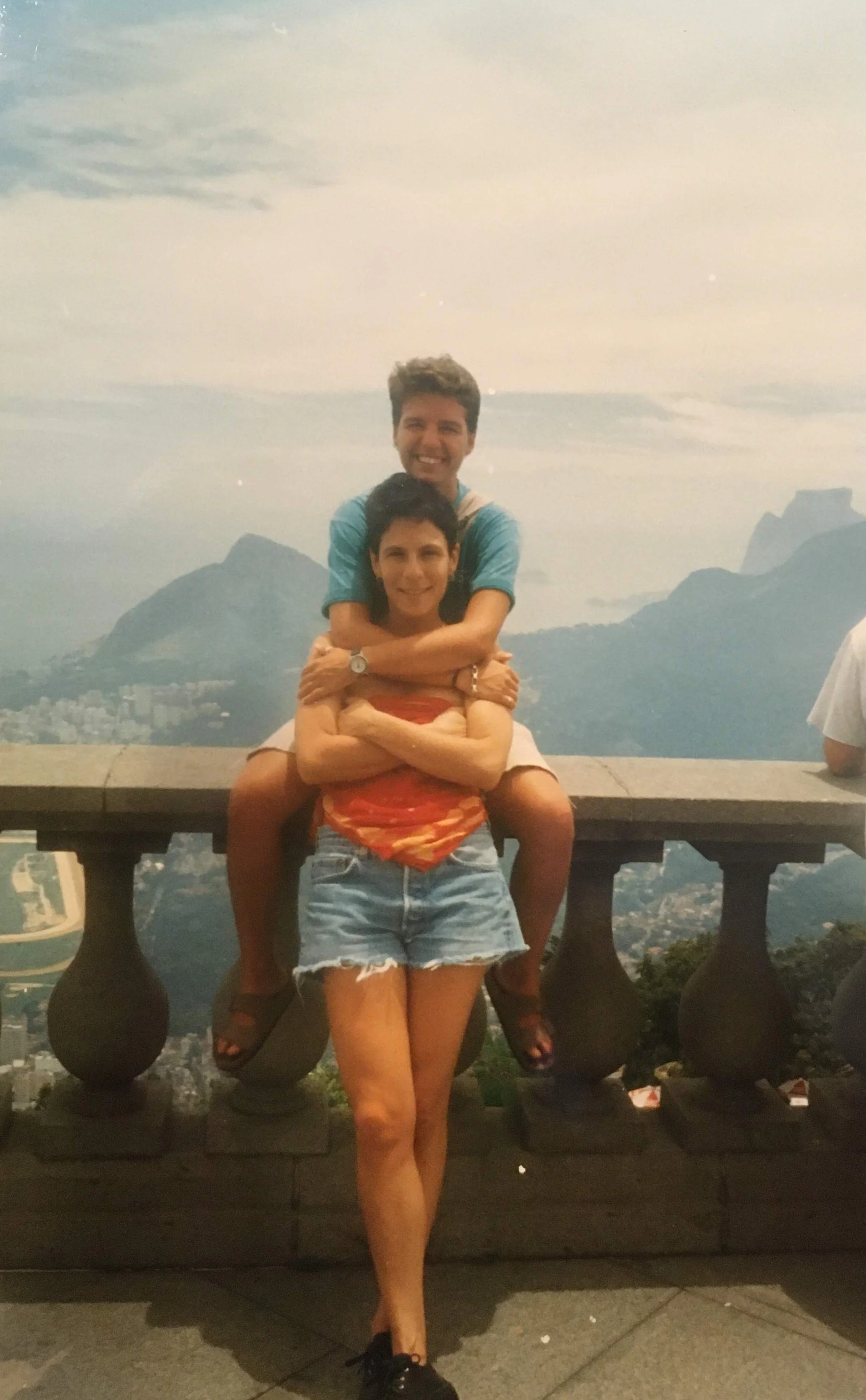

Today is my 31st anniversary. Technically, it’s OUR 31st anniversary: me and my partner, Rocki. We fell in love before the Twin Towers fell and after the US was part of forcing the rightfully-elected Chilean President Salvador Allende to fall. It’s the death anniversary of a friend’s parent and it’s Enkutatash or Ethiopian New Year and this year, it is also Rosh Hoshana eve. A whole mess of babies are about to be born (somewhere between 370,000 and 385,000 are likely) and a smaller group will die (about 178,000 minus moments of escalated war, famine and natural disasters). It’s a day like any other. It’s a special day for some of us. It’s a dreadful day for others.
I get asked, often, how my partner and I have managed to stay together for so long. In the queer movement worlds we move through, there aren’t a lot of long-term relationships. I don’t think there are many in the other worlds we hear about either. My first response to that question is usually this: I did not plan for a long-term relationship. I had no fantasies of getting married, no romantic dreams about wedding dresses and ‘til death do us part. If anything, I was very much NOT interested in such a thing. It took about fifteen years of the two of us living together, having a kid, supporting the death of one of our parents and all kinds of other life stuff before I laughingly said to Rocki, huh, I guess we’re going to be the ones who get old together. I remember the two of us chortling and saying things about rocking chairs on porches. I still don’t think long term relationships are the goal, nor do I think that people who have been together for a long time in romantic partnerships should be lifted above the other ways that people have chosen to love. And yet, here we are.
My next response to that question - how have you stayed together - is usually this: I don’t know. Because that is true. I have no idea. I absolutely believe I got lucky with who I fell in love with (do you know Rocki? She’s kind of amazing). We are part of a community of people who support and love us. We live in a state where even before gay marriage was legal (something Rocki and I have never done, the married thing), there was support. Our families support us and always have. We have never had as much social stress aimed against us as some folks our age did in other places. And most of what we have experienced usually makes us laugh more than it frightens us. I mean, those two 20 something white dudes in the pick-up truck who pulled up next to us, mimed that we should roll down our windows and then did the tongue through the two fingers thing while calling us “carpet cleaners…” Rocki and I lost our shit, screaming with laughter out the window, “you mean carpet munchers?,” and the two of them sheepishly sped away. All of this is part of the answer but it isn’t the answer. It doesn’t explain why my respect and love for Rocki only grows. I am not sure if I can explain how we have stayed together, but I can certainly explain why I haven’t left.
As someone who grew up experiencing physical and emotional violence, having someone love me could be very confusing. I had to learn to trust that she is not going to try to manipulate me for her own safety or to make sure her worldview is unchallenged. I had to learn that being with another person who says they love you is not inherently dangerous. She, like me, has sometimes been incredibly shitty which means I have had to learn the difference between the-shitty-that-can-destroy and the-shitty-that-is-people-peopleing. For a lot of years, any of these things would pull up a hell of a flight response in me. Not a rational flight response and not a thought-out flight response but an instinctive rooted-in-the-past get-me-the-fuck-out-of-here flight response.
I remember one year, sometime before we became parents, I felt that desire to run as fast and as far away as possible. I remember sitting and thinking about all of the things I would do, where I would go and how much easier it would be to just be alone. It was that, the feeling that things would be easier, that made me pause. Like really? Would it be easier?
I remember sitting there and thinking, but I still like Rocki. She makes me laugh and I really respect her. When I was falling in love with her, I was so afraid that what I saw was not what was real (more about my past than about her), that I asked people to give me their opinions. I asked our shared friends of color - ok, is she a different kind of white person when she is with you than when she is with white folks? I asked people who have known her for years - is she really this kind and attentive or does she do it to catch ya? I asked questions and everyone said some version of this: she is exactly as she seems and that is someone wonderful.
So I sat there, flight response screaming inside, remembering those conversations and that I liked her and I took myself through a kind of check list. This is the checklist I developed that got me through a big chunk of years.
Do I still respect her? This is huge. Respecting her doesn’t mean liking how she is being with me in this exact present moment. It means seeing how she moves through the world and tends relationships and acts in alignment with her own values. If the answer is yes, then…
Do I still like the way she smells? Sometimes our bodies give us clues while our mind is still holding on to something else. I remember with a past relationship that the first sign that things were shifting was that I felt a small recoil inside when I smelled her. I was embarrassed by that recoil, thought I was being a bitch, but now, when I stick my nose in Rocki’s neck and get a good sniff and she still smells good to me, I trust that. I trust it even when other things feel confusing.
Am I still attracted to her? That is a mix of the first two but it is more than that. Being attracted to her is feeling this sense of connection, yes sexual but more than that. Do I have moments when she comes home and seeing her gives me a pleasurable feeling? This is not the first question on my checklist because if I try to do this when my flight response is high, I can’t relax enough to notice attraction. But if I remember that I respect her and like her smell, then feeling all of the layers of attraction are not as difficult. I thought of this one because I remember a friend describing to me what it was like to just suddenly have the attraction turn off. They were like: I still like my husband, I still respect him but I look at him now like someone I could be good friends with. I don’t get excited when he comes home. I don’t look at him and think, damn, he’s mine. Everything else is just gone.
And then this is the biggest one, which I focus on last because unless I feel the connection of the other three, this one is harder to be humble about: am I sure that whatever is happening right now isn’t shaped by my own shit? Like am I totally sure that my own funkitude is not creating this moment? I know what it is to be in a conflict with someone and to feel this deep clarity, right down to my toes and up to my nose, that I have done everything I can, I am not triggered and this relationship is just not going to work. I know that feeling and, even more importantly, I know when something is NOT that. When I bring all of these together, particularly this last one, then I pause. If I still like her, she smells good, I am attracted to her and I can’t be sure that my shit isn’t strongly driving this moment, then why am I going to leave? My shit will follow me wherever I go and some things can only be worked through relationally. If I leave for some idea that there is something “better,” then next time I might find someone where my respect wavers a few years in. It seems like staying and working this through is what makes the most sense, even if the old parts of me want to go running.
This checklist has helped to settle me when the past is yelling so loudly in my ears that I can’t hear the present. It has helped to settle me when Rocki is being a pain in the ass - because she gets to be sometimes - and my reaction to it is about things I have experienced from other people and so I can’t see my way back to her. And it has helped when I haven’t even understood the reason for this mounting desire to get the hell out of there. After 31 years of being together, I don’t need to refer to this checklist anymore but some years back, it was like a running note that whispered inside when everything in me wanted to run away. That was about so many things, including struggling to trust that this wonderful person would actually choose me.
Notice that I don’t ask the question - is she abusing me? Because, very honestly, in moments in the past when I have been very triggered, I haven’t been able to tell the difference between discomfort and abuse. It took years of work to be able to discern the difference. And yes, I am aware with this checklist that it is possible for the worst kind of narcissistic abuser to sneak in through those cracks, but if that is what was actually going on, then using this list or not using this list isn’t what is going to get you free. If you are still unsure about any of this, then ask your friends, your friends, not your partner’s.
While I created this checklist to help me navigate my bullshit while loving my partner, I have also used it in other situations. While at REP or other formations I am in, I can’t necessarily go up to someone and stick my nose against their neck, but I can do versions of it. Meaning, our bodies are always reading the life signatures of the bodies around us. I can sense into someone who is annoying the shit out of me (hello beloved comrades at REP, of course you never annoy me, nor do I annoy you, right?) and just feel for their aliveness. Their specificity that is not-me, and then notice the feeling of it. Do I get a warm wash over my skin or do I get cold? Do my senses tingle, stay neutral or is there a slight contraction? A recoil?
All of the questions are fairly easy until that last one: can I be sure that my shit is not in some way shaping what is happening here? I have been showing up for and holding different kinds of conflicts for years now and this question is the one that determines what kind of work this is going to be. When listening to each person involved tell their story of what happened and what they want, at one point I ask them: when you look at everything that has happened, is there anything that you did or didn’t do that was part of creating this situation? Their answer says everything. And this place, more than any other, is where our struggle to discern between abuse, conflict and discomfort shows up. If the person I am interviewing is clear that this was a situation of abuse, then this is not a conflict process. Conflict is not abuse and dealing with abuse is not the same as dealing with conflict. But if the person is saying that this was not abuse but also, what is happening is only the other person’s fault, then there are a whole bunch of other things to unpack. And at the center of them is this: if someone can’t see their own shit, acknowledge that it exists and that once tensions get high, our shit can get goofy, then our capacity to do work around conflict is limited. Or, something else needs to happen first. And that, as I understand it, is one of the primary reasons that healing justice was created as a framework. Because the things we carry inside can drown the work we are trying to do together when those histories come rushing out, all focused on controlling whatever is going on, defending us as though we are in danger, and doing everything it can to keep us separate.
How we love the ones we share a bed with and how we love the ones we build dreams and strategy with is really all a version of the same thing, needing the same skills, even if applied differently. Rocki and I often reflect that if we can’t figure out how to struggle with those our lives are directly connected with, then we have no right to build great big strategies and frameworks and insist that strangers should pay attention. Everything is about how we love, of course, but even more than that, it’s about how we struggle.
Happy anniversary, Rocki. Thank you for how much you I have learned with you.